|
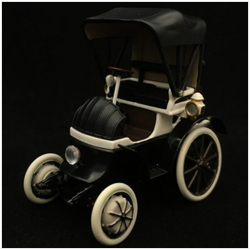
Lohner Porsche
1900 - 1 : 18
|
|
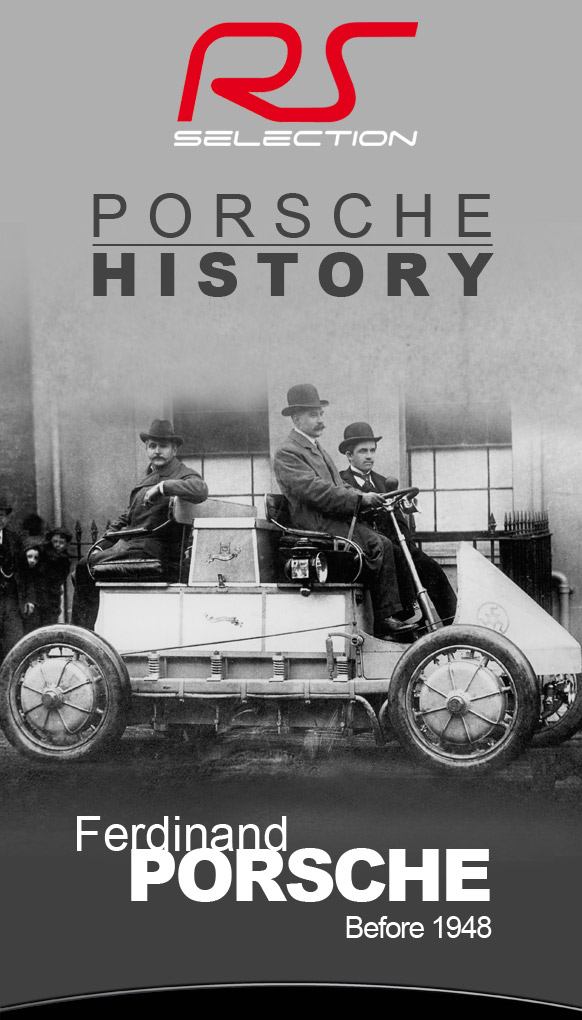
When Ferdinand Porsche decided to study electricity in 1893, the works of Edison and Tesla were still new. The young man was therefore immersed in the heart of a real industrial revolution. And in 1897, at the age of 22, he made his first electric motor for the company Béla Egger in Vienna.
This enabled him to attract the attention of the Jakob Lohner & Co car manufacturing company, which had started the production of cars the previous year, and who, tired of the problems associated with gasoline engines, hired the young engineer to develop this promising engine.
From 1898, the first prototypes were born, but it was with the Lohner-Porsche Modell 27, equipped with an electric motor in each of its front wheels, and presented at the Universal Exhibition of Paris in 1900, that the creative genius of Ferdinand Porsche was revealed.
The car had a range of 80 km, and would be rapidly available in 4-wheel drive version, the 'Always happy' - or 'Semper Vivus' - driven by four electric hub motors, acquired at the time by an English gentleman-driver and whose exact replica is currently on display at the Stuttgart Porsche Museum.
Als Ferdinand Porsche 1893 beschloss, Elektrizität zu studieren, waren die Werke von Edison und Tesla noch neu. Der junge Mann befand sich daher mitten in einer echten industriellen Revolution. Und 1897, im Alter von 22 Jahren, stellte er seinen ersten Elektromotor für die Firma Béla Egger in Wien her.
Dies ermöglichte es ihm, die Aufmerksamkeit des Automobilherstellers Jakob Lohner & Co auf sich zu ziehen, der im vergangenen Jahr mit der Produktion von Autos begonnen hatte und der den jungen Ingenieur mit der Entwicklung dieses vielversprechenden Motors beauftragte, der die mit Benzinmotoren verbundenen Probleme satt hatte.
Ab 1898 werden die ersten Prototypen geboren, aber gerade mit dem Lohner-Porsche Modell 27, das mit einem Elektromotor in jedem der Vorderräder ausgestattet ist und 1900 auf der Weltausstellung in Paris präsentiert wird, zeigt sich das kreative Genie von Ferdinand Porsche.
Das Auto hatte eine Reichweite von 80 km und wird schnell in der Allradversion erhältlich sein, der "Always happy" - oder "Semper Vivus" - angetrieben von vier elektrischen Nabenmotoren, die zu dieser Zeit von einem englischen Gentleman-Fahrer erworben wurden und dessen genaue Nachbildung derzeit im Stuttgarter Porsche Museum ausgestellt ist.
Lorsque Ferdinand Porsche décide d'étudier l'électricité, en 1893, les travaux d’Edison et de Tesla sont encore des nouveautés. Le jeune homme se trouve alors plongé au coeur d'une véritable révolution industrielle. En 1897, à l'age de 22 ans, il fabrique son premier moteur électrique pour la compagnie Béla Egger à Vienne.
Cela lui permet d'attirer l'attention de la manufacture de carrosses Jakob Lohner & Co, qui a entamé l’année précédente la production d’automobiles, et qui, lasse de ses déboires avec les moteurs à essence, engage le jeune ingénieur pour développer cette motorisation prometteuse.
Dès 1898, les premiers prototypes voient le jour, mais c’est avec la Lohner-Porsche Modell 27, dotée d’un moteur électrique dans chacune des roues avant, et présentée à l'Exposition Universelle de Paris en 1900, qu'est révélé le génie créateur de Ferdinand Porsche.
La voiture dispose d'une autonomie de 80 km, et sera rapidement déclinée en version de course à 4 roues motrices, la ‘Toujours Contente’ - ou 'Semper Vivus’ - mue par quatre moteurs-moyeux électriques, acquise à l'époque par un gentleman-driver anglais et dont la réplique exacte est exposée à l'heure actuelle au Porsche Museum de Stuttgart.
|
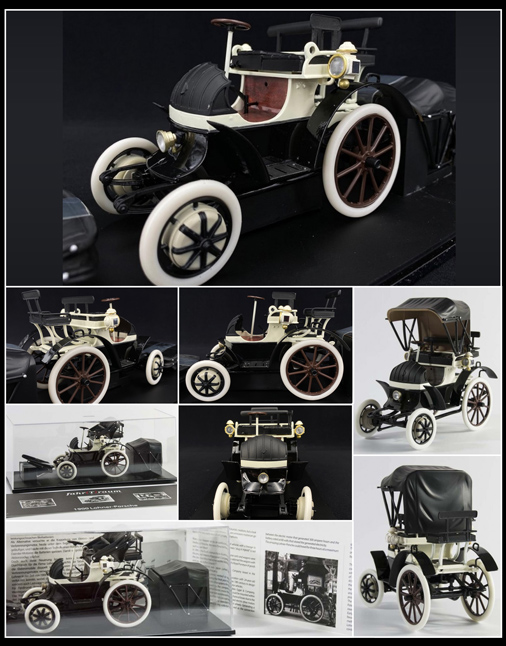 |
Lohner Porsche 1900
Noir / Blanc 1/18 - FahrTraum 3232
249
€ TTC / Incl. Taxes
|
 |
 |
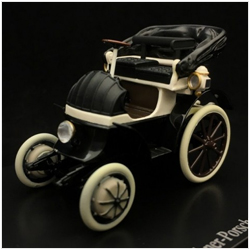
Lohner Porsche 1900 - Open Version
Noir / Blanc - 1/43
FahrTraum 43008 35052
129
€ TTC / Incl. Taxes
|
Lohner Porsche 1900 - Close Version
Noir / Blanc - 1/43
FahrTraum 43007 3168
129
€ TTC / Incl. Taxes
|
|
Lohner Porsche Mixte
1901 - 1 : 18
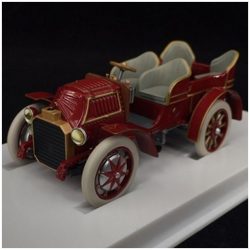
Ferdinand Porsche is the inventor of the first hybrid car. Indeed from 1901 , a gasoline engine was used to produce electricity for the batteries of the Lohner Porsche Mixed, developed by the young engineer, then aged 25. This model was the very first Porsche built in series, after the esteem success of the Lohner n° 27 100% electric also designed by the young man the previous year.
This hybrid car reached 56 km/h at top speed, which allowed him to achieve several speed records and even win the Exelberg rally, driven by Ferdinand Porsche himself. In total, just under 300 Lohner-Porsche chassis were sold until 1906, in two or four-wheel drive.
Another award: the Austrian prize for best automotive engineer for Porsche, plus other accolade, some decades later: the development of the famous Lunar Rover, NASA's lunar vehicle, was very obviously inspired by Porsche's brilliant design.
Ferdinand Porsche ist der Erfinder des ersten Hybridautos. In der Tat wurde ein Benzinmotor verwendet, um Strom für die Batterien des Lohner Porsche Mixte aus dem Jahr 1901 zu erzeugen, der von dem damals 25-jährigen jungen Ingenieur entwickelt wurde. Dieses Modell ist der allererste in Serie gebaute Porsche nach dem geschätzten Erfolg des Lohner n ° 27 100% elektrisch, ebenfalls vom jungen Mann im Vorjahr entworfen.
Dieses Hybridauto erreichte eine Höchstgeschwindigkeit von 56 km / h, wodurch er mehrere Geschwindigkeitsrekorde gewinnen und sogar die von Ferdinand Porsche selbst gefahrene Exelberg-Rallye gewinnen konnte. Insgesamt wurden bis 1906 nicht weit von 300 Lohner-Porsche-Fahrgestellen mit Zwei- oder Allradantrieb verkauft.
Eine weitere Belohnung: der österreichische Preis für den besten Automobil Ingenieur für Porsche und eine weitere Anerkennung einige Jahrzehnte später: Die Entwicklung des berühmten Lunar Rover, des Mondfahrzeugs der NASA, ist ganz klar vom brillanten Design von Porsche inspiriert.
Ferdinand Porsche est l’inventeur de la première voiture hybride. En effet, un moteur à essence permettait de produire l'électricité pour les batteries de la Lohner Porsche Mixte de 1901, mise au point par le tout jeune ingénieur, alors agé de 25 ans. Ce modèle est la toute première Porsche construite en série, après le succès d'estime de la Lohner n°27 100% électrique également conçue par le jeune homme l'année précédente.
Cette voiture hybride atteignait 56 Km/h en vitesse de pointe, ce qui lui permit de remporter plusieurs records de vitesse et même de gagner le rallye Exelberg, pilotée par Ferdinand Porsche en personne. Au total, pas loin de 300 châssis Lohner-Porsche ont été vendus jusqu’en 1906, en deux ou quatre roues motrices.
Autre récompense : le prix autrichien du meilleur ingénieur automobile pour Porsche, et autre reconnaissance, quelques décennies plus tard : la mise au point du fameux Lunar Rover, le véhicule lunaire de la NASA, est très clairement inspirée du génial design de Porsche.
|
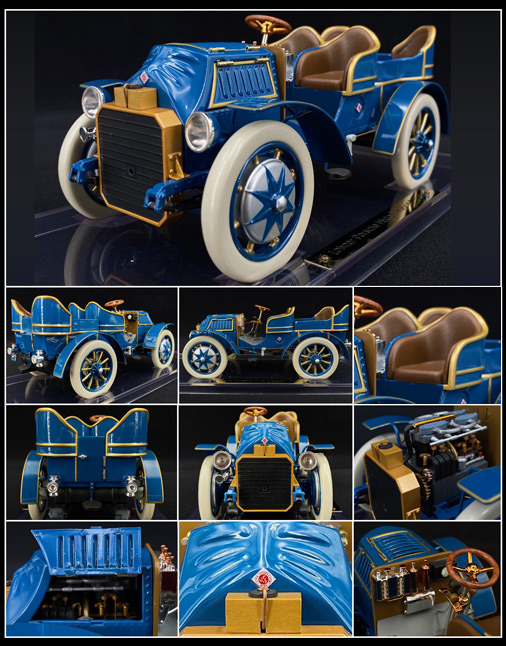 |
Lohner Porsche Mixte 1901
Bleu 1/18 - FahrTraum 3004
249
€ TTC / Incl. Taxes
|
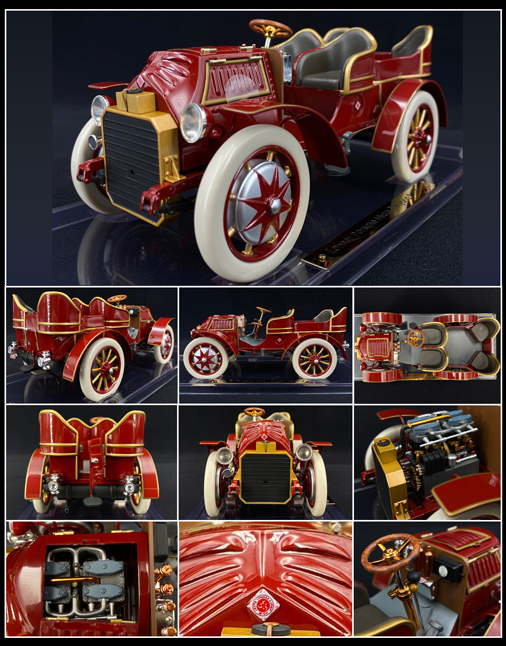 |
Lohner Porsche Mixte 1901
Rouge 1/18 - FahrTraum 3107
249
€ TTC / Incl. Taxes
|
 |
 |
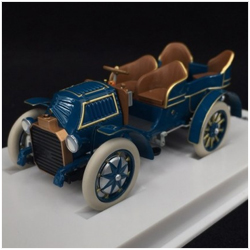
Lohner Porsche Mixte 1901
Bleu - 1/43
Porsche MAP02035008
69,95
39,95
€ TTC / Incl. Taxes
|
Lohner Porsche Mixte 1901
Rouge - 1/43
Porsche MAP02035108
69,95
39,95
€ TTC / Incl. Taxes
|
|
Ferdinand Porsche Austro Daimler
28/32 Maja 1908 - 1 : 18
In 1905 the love affair between Porsche and Lohner ended sadly. Ferdinand Porsche was by now an engineer with a well-established reputation, and he chosec to continue his career at Daimler. Daimler was at that time a true leader in the field of modern combustion engines, thanks to the specialised work of the engineer Wilhelm Maybach.
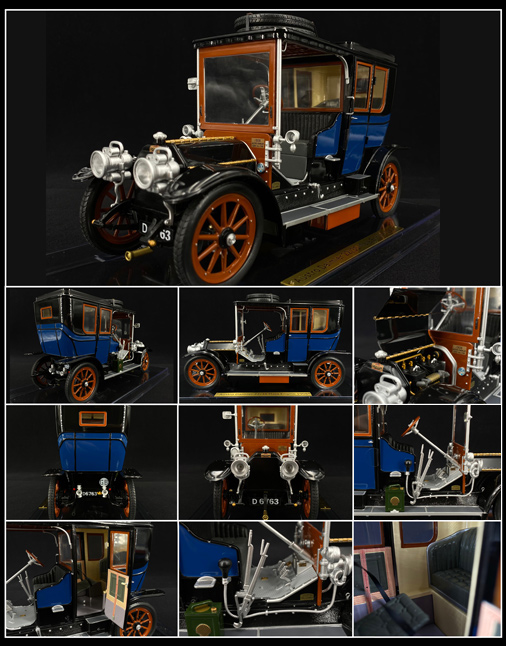
However, in 1908, it was with designer Otto Köhler and production technicians Otto Stahl and Oswald Kux that Ferdinand Porsche developed the second mass-produced car of his career: the 28/32. The market name of this model was "Maja", named after businessman Emil Jellinek's daughter, owner of the brand and already the creator of the "Mercedes" - his other daughter - the year before.
Under different names, the car would become the main model of the pre-war Austro Daimler spectrum. At that time, it was common to customize cars: in December 1907, Archduke Leopold Salvator, Inspector General of the Armies, ordered the splendid 28/32 "de Ville" from the coachbuilder Cerny, shown here in miniature.
Die Liebesbeziehung zwischen Porsche und Lohner endet leider im Jahr 1905. Ferdinand Porsche ist heute ein Ingenieur mit einem guten Ruf, und er hat Daimler ausgewählt, um seine Karriere fortzusetzen. Daimler ist derzeit dank der besonderen Arbeit des Ingenieurs Wilhelm Maybach ein wahrer Marktführer auf dem Gebiet moderner Verbrennungsmotoren.
Mit dem Designer Otto Köhler und den Produktionstechnikern Otto Stahl und Oswald Kux entwickelte Ferdinand Porsche 1908 das zweite Serienauto seiner Karriere, den 28/32. Der kommerzielle Name dieses Modells ist "Maja", benannt nach der Tochter des Geschäftsmanns Emil Jellinek, Inhaber der Marke und bereits im Jahr zuvor Schöpfer des "Mercedes" - seiner anderen Tochter.
Unter verschiedenen Namen wird das Auto zum Hauptmodell des Austro Daimler-Angebots aus der Vorkriegszeit. Zu dieser Zeit ist es üblich, Autos anzupassen: Im Dezember 1907 bestellte Erzherzog Leopold Salvator, Generalinspektor der Armeen, dem Karosseriebauer Cerny die hier in Miniatur gezeigte prächtige 28/32 "de Ville".
L'histoire d'amour entre Porsche et Lohner se termine tristement en 1905. Ferdinand Porsche est désormais un ingénieur à la réputation bien établie, et son choix de carrière se porte sur la société Daimler. Cette dernière est alors en pointe dans le domaine du moteur à combustion moderne, grâce en particulier au travail de l'ingénieur Wilhelm Maybach.
Mais c'est avec le designer Otto Köhler et les techniciens de production Otto Stahl et Oswald Kux que Ferdinand Porsche met au point en 1908 la seconde automobile produite en série de sa carrière, la 28/32. Le nom commercial de ce modèle est "Maja", du nom de la fille de l'homme d'affaires Emil Jellinek, propriétaire de la marque et déjà créateur de la "Mercedes" - son autre fille - l'année précédente.
Sous différentes appellations successives, la voiture deviendra le modèle principal de l'offre Austro Daimler d'avant-guerre. A l'époque, il est fréquent de personnaliser les automobiles : en décembre 1907, l'archiduc Léopold Salvator, inspecteur général aux armées, commande à la carrosserie Cerny la splendide 28/32 "de ville" représentée ici en miniature.
|
 |
Ferdinand Porsche Austro Daimler 28/32 Maja 1908
Bleu 1/18 - FahrTraum 3008
249
€ TTC / Incl. Taxes
|
 |
Ferdinand Porsche Austro Daimler 28/32 Maja 1908
Bleu - 1/43
FahrTraum 43003 3114
129
€ TTC / Incl. Taxes
|
|
Ferdinand Porsche Austro Daimler
Prinz Heinrich 1910 - 1 : 18
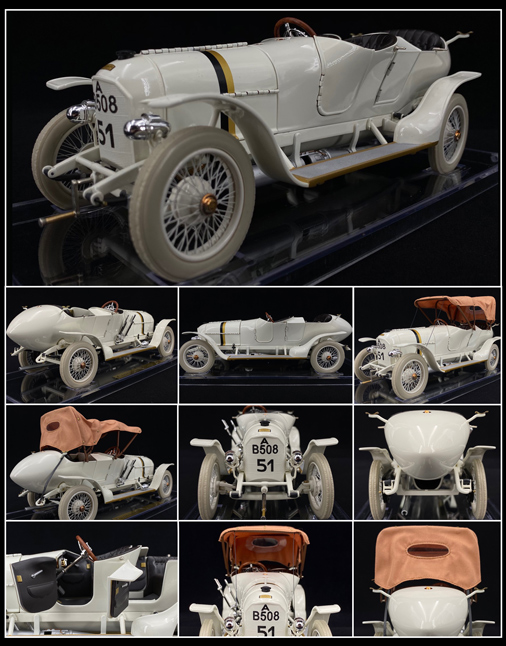
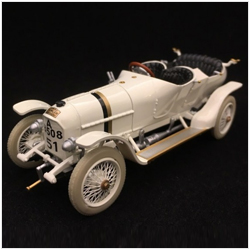
Upon his arrival at Daimler, Ferdinand Porsche was asked to build a racing car. The main objective was victory in the Prinz Heinrich race, reserved for series built cars and which took place on the roads of the Austro-Hungarian Empire from 1909. Nothing insurmountable for Porsche however, whose creations were already able to drive at 185 km/h.
The first models were promising, despite technical choices not always having been made, but in the end it was a Mercedes which won the first edition of the race. Mercedes being the then German branch of Daimler, only Ferdinand Porsche was really frustrated by the defeat. And he had to battle to impose a new optimized version of his racing car.
A winning bet : the following year, in 1910, the new cars designed by Porsche took the first three places of the Prinz Heinrich Cup, with the first Mercedes finishing seventh. A tremendous satisfaction for the engineer, but also for the driver: Ferdinand Porsche was driving the winning car! Nonetheless the event helped precipitate the split between the two branches of Daimler, weakening them both.
Bei seiner Ankunft in Daimler wird Ferdinand Porsche gebeten, einen Rennwagen zu bauen. Hauptziel ist der Sieg im Prinz Heinrich-Rennen, das für Serienautos reserviert ist und ab 1909 auf den Straßen des Österreichisch-Ungarischen Reiches stattfindet. Nichts Unüberwindbares für Porsche, dessen Kreationen bereits mit 185 km / h fahren können.
Die ersten Modelle sind vielversprechend, obwohl die technischen Entscheidungen nicht immer gestoppt wurden, aber am Ende ist es ein Mercedes, der die erste Ausgabe des Rennens gewinnt. Da Mercedes damals die deutsche Niederlassung von Daimler war, ist nur Ferdinand Porsche von der Niederlage wirklich frustriert. Und er muss kämpfen, um eine neue optimierte Version seines Rennwagens durchzusetzen.
Siegerwette: Im folgenden Jahr, 1910, gewinnen die von Porsche entworfenen Neuwagen die ersten drei Plätze des Prinz Heinrich Cup, der erste Mercedes wird Siebter. Große Zufriedenheit für den Ingenieur, aber auch für den Fahrer: Ferdinand Porsche fuhr das siegreiche Auto! Aber das Ereignis wird dazu beitragen, die Spaltung zwischen den beiden Zweigen von Daimler zu beschleunigen und beide zu schwächen.
Dès son arrivée chez Daimler, on demande à Ferdinand Porsche de construire une voiture de course. L'objectif principal est la victoire à la course Prinz Heinrich, réservée aux voitures de série et qui se déroule sur les routes de l'Empire austro-hongrois à partir de 1909. Rien d'insurmontable pour Porsche, dont les créations sont d'ores et déjà capables de rouler à 185 km/h.
Les premiers modèles sont prometteurs, malgré des choix techniques pas toujours arrêtés, mais au final c'est une Mercedes qui remporte la première édition de la course. Mercedes étant alors la branche allemande de Daimler, seul Ferdinand Porsche se montre réellement frustré par la défaite. Et il doit se battre pour imposer une nouvelle version optimisée de son bolide.
Pari gagnant : l'année suivante, en 1910, les nouvelles voitures dessinées par Porsche enlèvent les trois premières places de la Coupe du Prinz Heinrich, la première Mercedes terminant septième. Grande satisfaction pour l'ingénieur, mais aussi pour le pilote : Ferdinand Porsche pilotait la voiture victorieuse ! Mais l'événement contribuera à précipiter la scission entre les deux branches de Daimler, les fragilisant toutes les deux.
|
 |
Ferdinand Porsche Austro Daimler Prinz Heinrich 1910
Blanc 1/18 - FahrTraum 3003
249
€ TTC / Incl. Taxes
|
 |
Ferdinand Porsche Austro Daimler Prinz Heinrich 1910
Blanc - 1/43
FahrTraum 43006 3007
129
€ TTC / Incl. Taxes
|
|
Ferdinand Porsche Austro Daimler
Sascha 1922 - 1 : 18
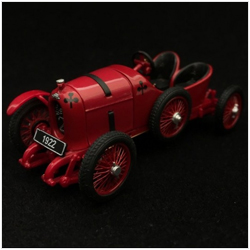
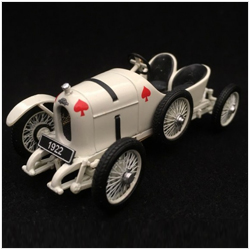
The Austro-Daimler Sascha marked the beginning of Porsche's long tradition of involvement in the Targa Florio, the most demanding and challenging road race. This compact car, but with first-class performance, Ferdinand Porsche designed as the precursor of a four-seat production model. It won delete the first and second places in its engine class for its first attempt in 1922.
The key to this success is its extreme maneuverability and controlled fuel consumption, made possible by the exceptionally low weight of this vehicle - only 598 kg. The car was a commission from Count Alexander "Sascha" Kolowrat, a rich film producer and friend of Ferdinand Porsche. Kolowrat finances, Austro-Daimler built, and 43 wins in competition were recorded, out of 53 participations.
For Ferdinand Porsche, he clearly demonstrated his ability to design in extreme conditions. He tried to impose the serial production of the Sascha, but the Austro-Daimler financiers did not follow him. Porsche slammed the door, too eager to dedicate itself to motor racing and develop its main innovation: the particular principle of the power-to-weight ratio as a key attribute of all sports cars.
Der Austro-Daimler Sascha markiert den Beginn der langen Tradition von Porsche im Targa Florio, dem anspruchsvollsten und herausforderndsten Straßenrennen. Dieses kompakte Auto, aber mit erstklassiger Leistung, hat Ferdinand Porsche als Vorläufer eines viersitzigen Serienmodells konzipiert. Bei seinem ersten Versuch im Jahr 1922 gewann er den ersten und zweiten Platz in seiner Motorenklasse.
Der Schlüssel zu diesem Erfolg liegt in der extremen Manövrierfähigkeit und dem kontrollierten Kraftstoffverbrauch, die durch das extrem geringe Gewicht dieses Fahrzeugs - nur 598 kg - ermöglicht werden. Das Auto ist ein Auftrag von Graf Alexander "Sascha" Kolowrat, einem reichen Filmproduzenten und Freund von Ferdinand Porsche. Von 53 Beteiligungen werden Kolowrat-Finanzen, die von Austro-Daimler gebaut wurden, und 43 Siege im Wettbewerb verzeichnet.
Für Ferdinand Porsche wird die Fähigkeit seiner Kreationen unter extremen Bedingungen demonstriert. Er versucht, den Serienbau der Sascha durchzusetzen, aber die Austro-Daimler-Finanziers folgen ihm nicht. Porsche knallt die Tür zu, zu eifrig, sich dem Motorsport zu widmen und seine Hauptidee zu entwickeln: das besondere Prinzip des Leistungsgewichtes als Schlüsselmerkmal aller Sportwagen.
C'est avec la Sascha de Austro-Daimler que débute la grande tradition de l'engagement de Porsche dans la Targa Florio, la très exigeante et très difficile course sur route. Cette voiture compacte, mais aux performances de tout premier ordre, Ferdinand Porsche l'a conçue comme le précurseur d'un modèle de production à quatre places. Elle décroche les premières et deuxièmes places dans sa catégorie de cylindrée dès sa première tentative en 1922.
La clé de ce succès : une maniabilité extrême et une consommation de carburant maîtrisée, rendues possibles par le poids extrêmement réduit de ce véhicule - seulement 598 kg. La voiture est une commande du Comte Alexander "Sascha" Kolowrat, un riche producteur de films et ami de Ferdinand Porsche. Kolowrat finance, Austro-Daimler construit, et 43 victoires en compétition sont enregistrées, sur 53 participations.
Pour Ferdinand Porsche, démonstration est faite de l'aptitude de ses créations dans des conditions extrêmes. Il tente d'imposer la construction en série de la Sascha, mais les financiers de Austro-Daimler ne le suivent pas. Porsche claque la porte, trop désireux de se consacrer à la compétition automobile et de développer son idée maîtresse : le principe particulier du rapport poids-puissance comme un attribut clé de toutes les voitures de sport.
|
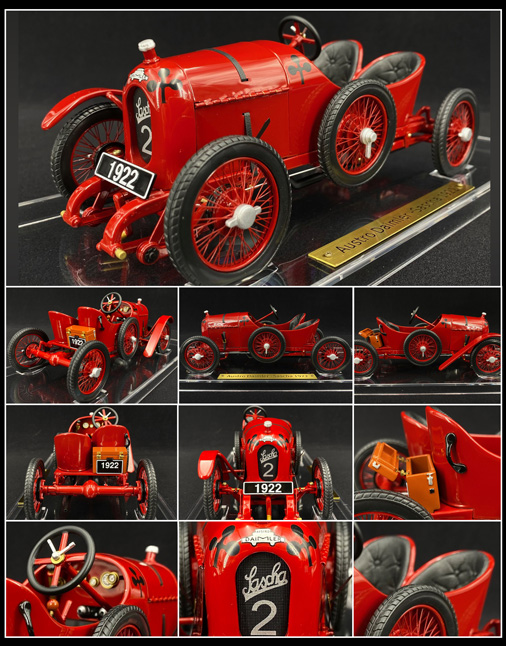 |
Ferdinand Porsche Austro Daimler Sascha 1922
Rouge 1/18 - FahrTraum 3009
249
€ TTC / Incl. Taxes
|
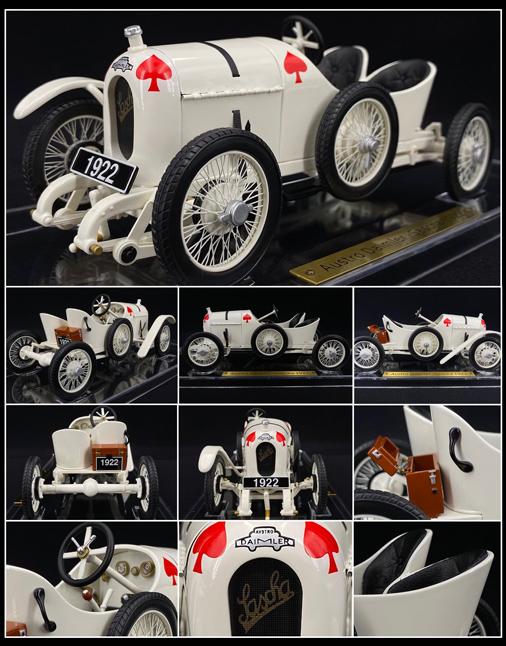 |
Ferdinand Porsche Austro Daimler Sascha 1922
Blanc 1/18 - FahrTraum 3061
249
€ TTC / Incl. Taxes
|
 |
 |
Ferdinand Porsche Austro Daimler
Sascha 1922
Rouge - 1/43
FahrTraum 43005 3111
129
€ TTC / Incl. Taxes
|
Ferdinand Porsche Austro Daimler
Sascha 1922
Blanc - 1/43
FahrTraum 43004
129
€ TTC / Incl. Taxes
|
|
Ferdinand Porsche Austro Daimler
ADR 6 Sport Torpedo 1929 - 1 : 18
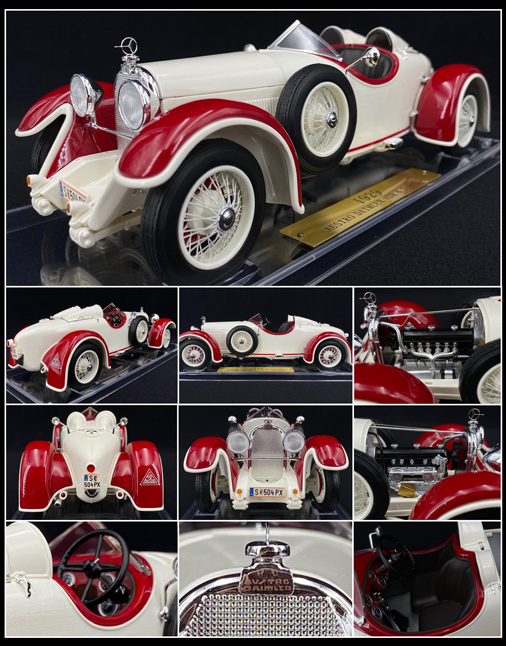
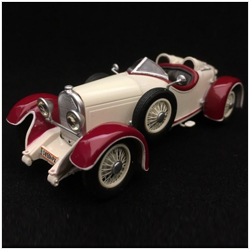
The most famous pre-war Austro-Daimler sports car, Hans Stuck's ADM-R, represents the epitome of the Austrian engineers' know-how at the time. Not only is this an evolution of Ferdinand Porsche's famous Sascha, but it is derived from the brand's flagship model: ADR. And in particular the ADR 6 Sport Torpedo, made especially for the personal use of Hans Stuck.
If one looks closely, the ADR 6 Sport Torpedo is purely the ADM-R, weighed down with the necessary accessories to make it a road car: wings, spare wheel, two additional seats - including a mother-in-law seat, running boards, headlights... It has a chassis signed Porsche and a motor derived from the Porsche engine of the Sascha.
Only two copies were built. But the model will serve as a basis for the most prestigious Austro-Daimler, the legendary Bergmeister of 1932. If the creations of the brand at the time showed a certain mastery and know-how, their relatively high price prohibited commercial success, and in 1934 Austro Daimler merged definitively with Steyr, another company to have benefited from the lights of Ferdinand Porsche.
Der bekannteste Austro-Daimler-Sportwagen der Vorkriegszeit, der ADM-R von Hans Stuck, ist der Inbegriff des damaligen Know-hows der österreichischen Ingenieure. Dies ist nicht nur eine Weiterentwicklung des berühmten Sascha von Ferdinand Porsche, sondern leitet sich auch vom Flaggschiff der Marke ab: ADR. Und insbesondere der ADR 6 Sport Torpedo, der speziell für den persönlichen Gebrauch von Hans Stuck entwickelt wurde.
Wenn man genau hinschaut, ist der ADR 6 Sport Torpedo nur der ADM-R, der mit dem notwendigen Zubehör für ein Straßenauto beschwert ist: Flügel, Reserverad, zwei zusätzliche Sitze - einschließlich eines Schwiegermuttersitzes, Trittbretter , Scheinwerfer ... Es hat ein Porsche-Chassis und einen Motor, der vom Porsche-Motor des Sascha abgeleitet ist.
Es wurden nur zwei Exemplare gebaut. Das Modell wird jedoch als Grundlage für den renommiertesten Austro-Daimler dienen, den legendären Bergmeister von 1932. Wenn die Kreationen der Marke zu dieser Zeit eine gewisse Meisterschaft und ein gewisses Know-how aufweisen, verbietet ihr relativ hoher Preis den kommerziellen Erfolg 1934 fusioniert Austro Daimler endgültig mit Steyr, einem anderen Unternehmen, das von den Lichtern von Ferdinand Porsche profitiert hat.
La plus fameuse voiture de sport Austro-Daimler d'avant-guerre, la ADM-R de Hans Stuck, représente la quintessence du savoir-faire des ingénieurs autrichiens de l'époque. Non seulement il s'agit d'une évolution de la fameuse Sascha de Ferdinand Porsche, mais elle est dérivée du modèle phare de la marque : l'ADR. Et plus particulièrement de l'ADR 6 Sport Torpedo, fabriqué spécialement pour l'usage personnel de Hans Stuck.
Si on regarde bien, l'ADR 6 Sport Torpedo n'est aute que l'ADM-R, alourdie des accessoires nécessaires pour en faire une voiture de route : des ailes, une roue de secours, deux sièges supplémentaires dont un siège belle-mère, des marchepieds, des phares... Elle a donc un châssis signé Porsche et un moteur dérivé du moteur Porsche de la Sascha.
Deux exemplaires seulement furent construits. Mais le modèle servira de base à la plus prestigieuse des Austro-Daimler, la légendaire Bergmeister de 1932. Si les créations de la marque à l'époque font montre d'une maîtrise et d'un savoir-faire certains, leur prix relativement élevés interdisent le succès commercial, et en 1934 Austro Daimler fusionne définitivement avec Steyr, autre entreprise à avoir bénéficié des lumières de Ferdinand Porsche.
|
 |
Ferdinand Porsche Austro Daimler ADR 6 Sport Torpedo 1929
Blanc 1/18 - FahrTraum 3216
249
€ TTC / Incl. Taxes
|
 |
Ferdinand Porsche Austro Daimler
ADR 6 Sport Torpedo 1929
Blanc - 1/43
FahrTraum 43010 3210
129
€ TTC / Incl. Taxes
|
|